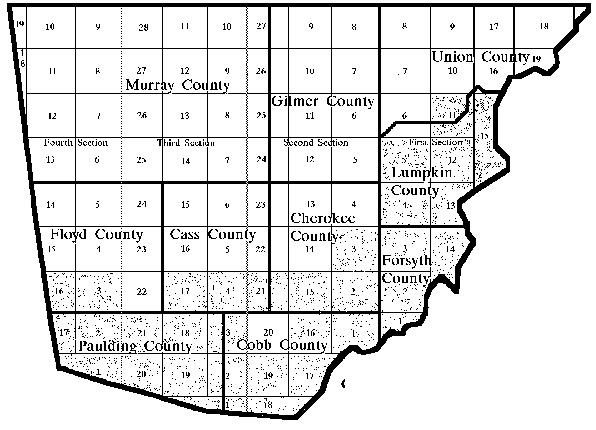
Georgia gave the Cherokee Nation East away in the 6th or 1832 Land Lottery. See the State page for the rules of who got a draw, etc. All the lots were numbered as being in Cherokee County. The part that was cut off into Lumpkin consisted of Land Lots 4, 5, part of 11, 12, 13 (all 40 acre lots) part of 6 (160 acres). See the map.
Gold had been discovered in 1828 and some believe that the Indians and mixed bloods in the area had been aware of it and mined gold earlier than that. The State of Georgia divided the area where gold could exist into 40 acre lots and the rest into 160 acres. Scouts had been in the area looking out for where gold already had been found. Georgia had had troops in the area to try to stop the illegal poaching of the gold. The speculators had riders ready when the Lots were drawn and as soon as one of the "good" gold lots were drawn, the riders would be dispatched to the winners residence to purchase the lot. This was a race between the speculators fast horses and smooth talking buyers to see who could get there and close the deal before a competitor showed up.
Draws could be sold or mortgaged before the lottery even began and many people either gambled that they wouldn't win or that they wouldn't want the property and sold their draws. In Book A of the Deed Records of Forsyth County almost the entire book consists of assigned draws. Oliver Strickland was elected Clerk of the Superior Court of Cherokee County in the first election in February of 1832. When the counties were split, those officials who had been elected for all of Cherokee County assumed the office in the county of their residence. Oliver Strickland resided in Forsyth County and apparently kept the same book and just picked up with Forsyth County Deeds at that point. All early deeds in all of the ten counties will say for example, Land Lot "whatever", "whichever" Co., formerly Cherokee Co.
A lot of the people who drew, didn't want to move and just sold. People who owed money and were lucky in the draw had fi fas levied on them by their creditors and the lots were sold by the Sheriffs of the Counties. Many of the early sales will be recorded and indexed under the Sheriff's name. Of those people who decided to move and take up their land, if it didn't have gold, 40 acres of wooded hills and gullys wouldn't support a family. They had to buy extra land to farm. There were improved properties with houses or stores or taverns or mills or ferries. Some of these were sold back to the original owners and in some cases the new owner simply took possession and "dispossed" the former owners. With the transfer of this much property there were lawsuits and lawsuits. Lawyers swarmed in to go where the cases were.
So as with any boom area you had an influx of speculators, lawyers, merchants with the addition on top of gold miners and "camp followers" and thieves. Add on top of this the preachers and teachers and the ordinary farmers and north Georgia started with a potpourri of people. Some stayed and some moved on, but it was an exciting time.